The Five Elements
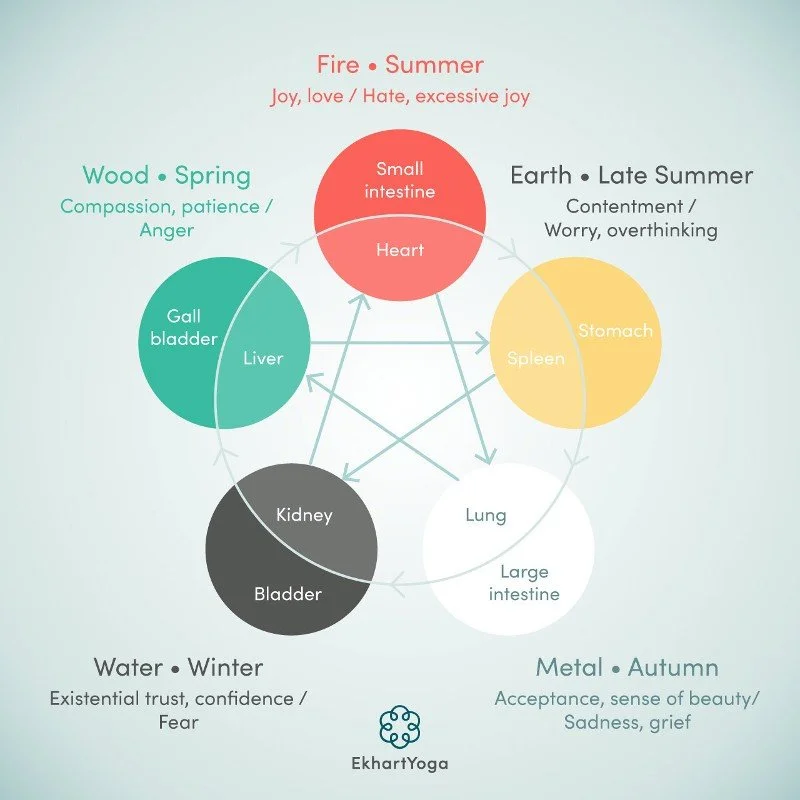
The Five Elemental Theory is an ancient framework used in practices like yoga, Ayurveda, and traditional healing systems to understand the connection between nature and the human body. It’s based on the idea that everything—both in the universe and within us—is made up of five core elements:
🌿 The Five Elements
Earth (Prithvi)
Represents stability, grounding, and structure. In the body, it relates to bones, muscles, and physical strength. Emotionally, it’s tied to feeling secure and supported.Water (Jala)
Symbolizes flow, adaptability, and emotion. It governs bodily fluids, circulation, and creativity, as well as our ability to connect and feel.Fire (Agni)
Associated with transformation, energy, and digestion—both physically and mentally. It fuels metabolism, passion, and clarity.Air (Vayu)
Represents movement and communication. It governs breath, the nervous system, and mental activity—helping us think, move, and express.Ether / Space (Akasha)
The most subtle element, linked to openness, awareness, and consciousness. It creates space for everything else to exist and is connected to intuition and inner stillness.
🧘 How It’s Used in Yoga
In a yoga or retreat setting, the Five Elemental Theory becomes a powerful tool for balance:
Practices are designed to activate or calm specific elements
You learn to recognize imbalances (e.g., too much “fire” = stress or burnout)
Sessions may include movement, breathwork, meditation, and diet aligned with each element
It helps create a holistic mind-body connection
🌄 Why It Matters for a Retreat
A retreat built around the Five Elements isn’t just about yoga—it’s about realignment. By working through each element, you:
Release tension and emotional blocks
Reconnect with natural rhythms
Restore balance across body, mind, and energy
It’s especially powerful in a mountain setting, where nature itself reflects all five elements in a raw, immersive way.